
[2025-12-19]SCMP评论区:打破了一个多世纪的上限,中国超高温热泵技术突破,为利用太阳能熔炼矿石开辟新途径
文章原始标题:China’s ultra-hot heat pump breakthrough paves way for melting ore with sunlight
国外来源地址:https://www.scmp.com/news/china/science/article/3336593/chinas-ultra-hot-heat-pump-breakthrough-paves-way-melting-ore-sunlight
该译文由蓝林网编辑,转载请声明来源(蓝林网)
内容简介: 中国团队打破了这一温度限制
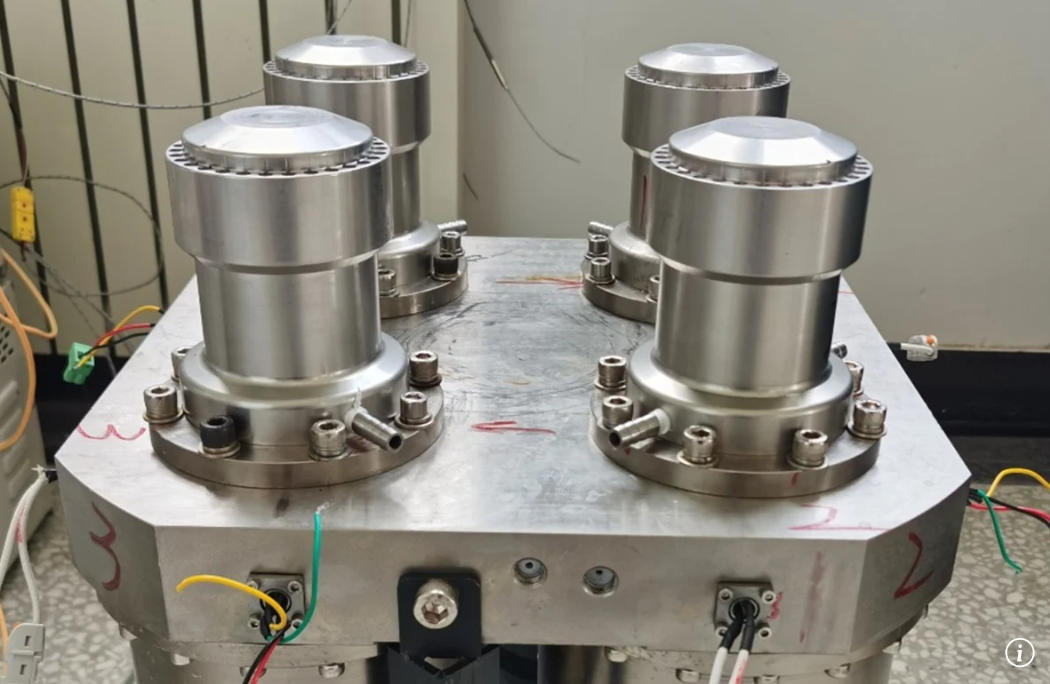
For over a century, the dream of efficiently concentrating low-grade heat into high-temperature industrial energy has been constrained by a stubborn ceiling: 200 degrees Celsius (392 degrees Fahrenheit).
Now, a team from China has shattered that temperature limit. Using a revolutionary heat pump with no moving parts, they achieved an output of 270 degrees with a 145-degree heat source to drive the cycle.
Developed by a team led by Luo Ercang at the Technical Institute of Physics and Chemistry of the Chinese Academy of Sciences (CAS), the technology could generate high-grade heat from modest sources, such as solar collectors or industrial exhausts, for applications in ceramics, petrochemicals and metallurgy.
This could lead to solar farms directly producing the intense heat needed to smelt iron ore or refine aluminium, and chemical factories recycling their own waste warmth for splitting or combining molecules.
一个多世纪以来,将低品位热能高效转化为高温工业能源的梦想一直受限于一个顽固的上限:200摄氏度(392华氏度)。如今,中国团队打破了这一温度限制。他们采用一种无运动部件的革命性热泵,利用145度的热源驱动循环,实现了270度的输出温度。
这项技术由中国科学院理化技术研究所罗二仓团队研发,能够从太阳能集热器或工业废气等中低温热源中产生高品质热能,应用于陶瓷、石化和冶金领域。这意味着太阳能电站可直接生产冶炼铁矿石或精炼铝所需的高温,化工厂也能回收自身废热用于分子分解或合成。
The breakthrough comes at a pivotal moment in the global energy race. Nearly half the world’s final energy consumption is devoted to heating and cooling, and industry accounts for almost half of that usage.
Much of this energy is generated by burning coal, oil or natural gas. In China alone, between 10 per cent and 27 per cent of total energy is lost as waste heat.
Capturing and upgrading even a fraction of this dissipated energy could transform China’s industrial efficiency, slash carbon emissions and drastically reduce manufacturing costs.
Luo’s team envisions that, by 2040, ultra-high-temperature heat pumps could deliver zero-carbon heat of up to 1,300 degrees, ushering in a green industrial revolution powered by sunlight, nuclear reactors and waste heat.
这一突破发生在全球能源竞赛的关键时刻。全球近一半的最终能源消耗用于供热和制冷,其中工业用途约占一半。这些能源大多通过燃烧煤炭、石油或天然气产生。仅在中国,总能源的10%至27%就以废热形式损失。即使回收利用其中一小部分,也能大幅提升中国工业能效、削减碳排放并显著降低制造成本。
罗二仓团队展望,到2040年,超高温热泵可提供高达1300度的零碳热能,推动一场由太阳能、核反应堆和废热驱动的绿色工业革命。
At the heart of this breakthrough lies a novel heat-driven thermoacoustic heat pump.
Unlike conventional pumps limited to heating homes or powering refrigerators, this system leverages the physics of sound and heat resonance, also known as thermoacoustic Stirling principles, to amplify low-grade thermal energy into ultra-high-temperature output.
Converting heat into powerful acoustic waves to drive a closed-loop thermal upgrade could bypass the mechanical and material limitations that have long plagued compressors and turbines, according to the researchers.
突破的核心是一种新型热驱动热声热泵。与传统仅用于家庭供暖或冰箱制冷的泵不同,该系统利用声与热共振的物理原理(即热声斯特林原理),将低品位热能放大为超高温输出。研究人员表示,通过将热能转化为强声波来驱动闭环热升级,可以绕过长期困扰压缩机和涡轮机的机械与材料限制。
The innovation was quickly published in top international journals, including Nature Energy, Applied Physics Letters, and Energy.
A December 3 article in China Science Daily quoted Luo as saying that the development of ultra-high-temperature industrial heat pumps for efficient energy use would be “a key pathway towards achieving carbon neutrality goals”.
这项创新很快发表在《自然·能源》《应用物理快报》和《能源》等国际顶级期刊上。《中国科学报》12月3日援引罗二仓的话称,发展超高温工业热泵以实现高效能源利用,将是“实现碳中和目标的关键路径”。
Accordingly, the CAS research team developed a prototype of a new Stirling thermoacoustic ultra-high-temperature heat pump.
This device combines the principles of the Stirling cycle, patented by Scottish inventor Robert Stirling in 1816, with thermoacoustics. The heat pump operates by using acoustic energy – intense standing sound waves – to pump heat from a lower-temperature source to a higher-temperature sink, making it an efficient, acoustically driven heat pump.
据此,中科院研究团队开发了一种新型斯特林热声超高温热泵原型机。该设备结合了苏格兰发明家罗伯特·斯特林于1816年获得专利的斯特林循环原理与热声学原理。该热泵通过利用声能,强烈的驻声波,将热量从低温热源泵送到高温热汇,从而成为一种高效的声驱动热泵。
The prototype can absorb heat from a source as low as 49 degrees. When the heat source temperature is 67 degrees, the system provides heating at 214 degrees.
The thermoacoustic heat pump has no moving parts, making it inherently reliable for long-term operation and capable of achieving a high temperature lift with the potential for high efficiency.
该原型机可以从低至49度的热源吸收热量。当热源温度为67度时,系统可提供214度的加热温度。这种热声热泵没有运动部件,因此本质上具有长期运行的可靠性,并能实现高温升,具备高效潜力。
Currently, advanced absorption heat pumps provide heating at about 100 degrees with a temperature lift of about 50 degrees. Absorption heat transformers can achieve temperatures below 200 degrees, also with a 50-degree lift.
In industrial processes, sectors like papermaking, dyeing, brewing and pharmaceuticals require heat of between 100 degrees and 200 degrees, while ceramics, metallurgy and petrochemicals need high-temperature heat from 200 degrees to over 1,000 degrees.
In a December 5 article in Nature Energy, Luo summarised various research fronts, including his team’s thermoacoustic Stirling heat pump, as promising pathways towards the realisation of ultra-high-temperature heat pumps.
He also suggested development directions for materials and technologies needed for future ultra-high-temperature heat pumps operating from 600K to 1,600K, or 327 degrees to 1,327 degrees, saying these could be achieved by 2040.
目前,先进的吸收式热泵可提供约100度的加热温度,温升约为50度。吸收式热变换器也能以50度的温升达到200度以下的温度。在工业过程中,造纸、印染、酿造和制药等行业需要100度至200度的热量,而陶瓷、冶金和石化则需要200度至1000度以上的高温热量。
在12月5日《自然·能源》的文章中,罗二仓总结了包括其团队的热声斯特林热泵在内的多个研究方向,认为它们是实现超高温热泵的有前景的路径。他还提出了未来在327度至1327度(即600K至1600K)范围内运行的超高温热泵所需材料和技术的发展方向,并表示这些目标有望在2040年前实现。
Luo said his team would next “focus on heat pumps for processes like petrochemicals, metallurgy and ceramics that require even higher temperatures”.
He explained that a heat-driven pump could use a thermal source, such as a nuclear pressurised water reactor (about 300 degrees) or a solar trough collector (400 degrees to 500 degrees), as the energy input.
“Using ultra-high-temperature thermoacoustic heat pumps, this could be raised to 500 degrees to 800 degrees, offering a new technological pathway for zero-carbon high-temperature heat in heavy industry,” Luo added.
罗二仓表示,他的团队下一步将“专注于为石化、冶金和陶瓷等需要更高温度的工艺过程开发热泵”。他解释说,热驱动泵可以使用热源,如核压水堆(约300度)或太阳能槽式集热器(400度至500度),作为能量输入。
“利用超高温热声热泵,可以将温度提升至500度到800度,为重工业的零碳高温热能提供一条新的技术路径。”罗二仓补充道。
---------------
West-Abalone-171
This article kinda loses the plot, but the novel part here is this is a thermally driven heat pump
You put in heat about 110°C above ambient, and 59% becomes lower temperature waste heat while 41% is upgraded by around 125°C.
So it's suitable for low cost solar parabolic thermal collectors (don't know wuether these are still remotely competitive with PV, but they were comparatively cheap at one point), or using waste heat streams (possibly including the waste heat from the end of your 270°C process, which would drop your power consumption by 41%).
Not usable to power smelters, though they could be a source of waste heat driving other processes.
这篇文章有点跑题了,但新颖之处在于这是一种热驱动热泵。
输入比环境温度高约110°C的热量,其中59%会变成低温废热,而41%的热量会被提升约125°C。
所以它适合搭配低成本的太阳能抛物面集热器使用(不知道现在和光伏比起来还有没有竞争力,但曾经相对便宜),或者利用废热流(可能包括那个270°C工艺末尾的废热,这样能让你的能耗降低41%)。
不过它不能给冶炼厂供能,但可以作为驱动其他工艺的废热源。
GreenStrong -> West-Abalone-171
Also worth pointing out that melting metal ore doesn't release metal, it just melts the ore. A reducing agent is required. The metal is bonded to oxygen or sulfur, you need something more attractive to tear it away. In smelting processes, this is carbon; the carbon is both the fuel and the reducing agent (oxygen absorber). One option to replace the carbon is hydrogen. This is a more realistic use case for hydrogen than vehicle fuel, but it is still thermodynamically challenging to store. There is a possibility to use electricity to tear oxygen out of ore molecules. Aluminum is produced this way, there is research into applying it to other metals. Boston Metals and a few other startups plan to commercialize this process for steel soon.
Anyway, if super duper heat pump existed, it would reduce the need for fossil fuel in a conventional smelting process, not eliminate it.
还要指出的是,熔化金属矿石并不会释放出金属,只是把矿石熔化了而已。需要还原剂才行。金属与氧或硫结合,得用亲和力更强的东西才能把它们分开。在冶炼过程中,这个角色由碳来扮演;碳既是燃料,也是还原剂(吸氧剂)。替代碳的一个选项是氢气。比起用作车辆燃料,氢气在这方面更实际一些,但储存起来在热力学上仍然很有挑战性。也有可能用电把氧从矿石分子中剥离出来。铝就是这样生产的,目前有研究试图把这种方法应用到其他金属上。波士顿金属和其他几家初创公司计划不久就将这种炼钢工艺商业化。
总之,就算存在超级热泵,也只能减少传统冶炼过程中对化石燃料的需求,而不是完全取代它。
Ben-Goldberg -> GreenStrong
Reduction of iron ore is done with carbon monoxide.
We could make CO¹ from biomass or waste plastic, or by electrolytic splitting of CO².
用一氧化碳可以还原铁矿石。
我们可以用生物质或废塑料来制取一氧化碳,或者通过电解分离二氧化碳来得到它。
SouthCarpet6057 -> Ben-Goldberg
Sweden is staring to use hydrogen to reduce iron ore.
I didn't know carbon monoxide was used, I thought it was carbon. (Coke)
Anyway, pre-heating the ore before this process, would reduce the amount of fuel needed. And if there is waste heat that can be collected , then that can be harvested. But they would just use concentrated sunshine directly. Like you can literally get it as hot as you want with concentrated sunshine. They could melt the iron ore and blow hydrogen through it to burn off the oxygen.
Like they would still need the hydrogen, but only for the reduction.
瑞典开始用氢气来还原铁矿石。
我之前不知道是用一氧化碳,还以为是直接用碳(焦炭)。
不管怎样,在还原前预热矿石可以减少燃料用量。如果有废热可以回收,那也能利用起来。但他们其实可以直接用聚光太阳能,用聚光加热的话,温度要多高就能有多高。他们完全可以把铁矿石熔融,然后通氢气烧掉氧。
也就是说,氢气还是需要的,但只用在还原这一步。
Sad_Dimension423 -> GreenStrong
It's possible to liberate oxygen with heating, but it typically has to be extreme heat. There are thermal cycles for producing hydrogen from water that use an intermediate compound, a transition metal or rare earth oxide, that is partially reduced by heating. The temperature are such that high concentration solar is needed.
Advances in PV and its economics have made such approaches less attractive, but research is ongoing.
通过加热释放氧气是可能的,但通常需要极高的温度。有些热循环制氢技术利用中间化合物(如过渡金属或稀土氧化物),通过加热使其部分还原。这类反应所需的温度极高,必须使用高聚光太阳能才能实现。
随着光伏技术及其经济性的进步,这类方法的吸引力有所下降,但相关研究仍在持续进行。
Smooth_Imagination -> West-Abalone-171
Its an interesting idea and I have had ideas like this for thermally driven heat pumps, for example coupled sterling engines, or supercritical and transcritical CO2, and metal hydride powered heat pumps.
They can particularly make sense when you want more low grade waste heat from ambient or other waste streans i.e. if your main heat engine is 40% efficient using industrial heat with high grade heat and you want a high COP ambient source heat output i.e district heating at COP5, because you can also dump the waste heat from the heat engine into this.
However, since the design described likely requires optical focusing, and has a COP under 1, it makes more sense to slightly improve the optical concentrator to get the desired temp as you are probably requiring direct sunlight, at modest increase in solar concentrator cost and a COP closer to 1.
But, where this makes sense, is where you have existing low cost heat at this over 100 degree above ambient temperature, no direct sunlight.
So cloudy locations might use phosphorescent or other means to get to that temp, or an industrial waste source.
But most heat needs in industry are below 200 degrees C, which expands the number of suitable low cost heat sources a lot.
Carnot efficiency in the heat engine goes down though, but up in the heat pump.
这个想法挺有意思的,我也考虑过类似的热驱动热泵方案,比如搭配斯特林发动机,或者超临界及跨临界二氧化碳系统,还有金属氢化物驱动的热泵。
这类方案特别适合需要从环境或其他废热流中获取更多低品位废热的情况,比如如果你的主热机利用高温工业热源时效率为40%,而你又想通过环境热源实现高制热系数(比如区域供暖达到制热系数5),这时就可以把热机产生的废热也导入这个系统。
不过,由于文中描述的设计可能需要光学聚焦,且制热系数低于1,更合理的做法其实是稍微改进聚光器来达到目标温度,毕竟这很可能需要直射阳光,而稍微增加聚光器成本就能让制热系数更接近1。
但这种设计真正适用的情况,是已经存在比环境温度高100度以上的低成本热源,且没有直射阳光的场景。比如多云地区可以用磷光材料或其他方式达到所需温度,或者利用工业废热源。
实际上工业领域大部分热需求都低于200摄氏度,这大大拓宽了适用低成本热源的范围。虽然热机的卡诺效率会降低,但热泵的效率会提升。
pantotheface888
They copied/stole from America again. If not, at what cost?
他们肯定又抄袭/偷窃美国的东西了。不然的话,代价是什么?
khoawala -> pantotheface888
You forgot the /s
你忘记加狗头了(/s)
melikesneakers -> pantotheface888
Fuck that lame ass fascist country.
去他妈的垃圾法西斯国家。
pantotheface888 -> melikesneakers
The thing is, I can't tell which country you're talking about lol
问题是,我都不知道你在说哪个国家,哈哈。
melikesneakers -> pantotheface888
America.
美国。
slaty_balls
There’s a guy on YouTube who took an huge plastic lens (screen) out of an old projection tv and melts rocks with it.
YouTube上有个人从旧投影电视里拆了个巨大的塑料透镜(屏幕),用它来熔化石头。
Another_Slut_Dragon -> slaty_balls
The physics actually aren't far off. The thermo-acoustic device is a cone. The pressure wave inside is expanding or compressing molecules to push cold to one end and hot to another.
这物理原理其实有点相近。那个热声装置就是个锥体,里面的压力波通过扩张或压缩分子,把冷量推向一端,热量推向另一端。